New Year Resolutions

Write it on your heart that every day is the best day in the year. -Ralph Waldo Emerson

It’s been said that what you do on the first day of the new year will influence what you do the rest of the year.  Hmm…I will make sure I am not cooking or cleaning on January 1 if that’s the case!

IMG_0703Since most of us are still enjoying a few more days of vacation, it is a good time to look ahead to 2014.  It has always been difficult for me to think of a “year” as anything  other than a school year-which for me, runs August to June, then summer vacation, and then a new year begins.  I’ve never done anything other than be a student or a teacher.  January to January is tricky for me.  That being said, we have been in school nearly 4 months and the winter break gives us time to refresh, restore, and refocus.

Someone asked me a while back what I like to do.  It seemed like a simple question but I found I had a little trouble answering it.  Of course, spending time with my family and friends made the list, but when pressed further, “What lights you up?” I fell silent.  This troubled me.  Why couldn’t I name anything? It occurred to me that I liked the idea of writing but never pursued it because I didn’t see myself as a writer.  A friend gently encouraged me and this blog was born.  I found I could quickly tap passion when it involved my students and their learning with the iPads.

I recently bought a “big girl” camera and have started pursuing a long hidden interest in photography.  I’m a true beginner in this endeavor, but am loving going on photo walks and discovering life behind the lens of a camera.  (I started a new photo blog here.)  What I am learning is you don’t have to be a professional to make art.

What does all of this mean for you?  I encourage you to explore some unexplored interests.  Step out and try something new.  Incorporating iPads in to my classroom has completely transformed the way I teach.  I don’t just think outside the box, I live there! Sometimes the people around you won’t understand your journey.  They don’t need to, it’s not for them.

Let 2014 be the year you step out, take some risks.  Resolve to hone your craft.  Create a classroom where you would want to be a student. Ditch old teaching methods, PowerPoints, and worksheets.  Examine who you are and what you like. Pursue some of your interests and you will be a more passionate teacher because of it.

What lights you up?

Today we will do exciting new things.  Let’s get to it!
Braving Technology in the Classroom

Do one thing every day that scares you -Eleanor Roosevelt

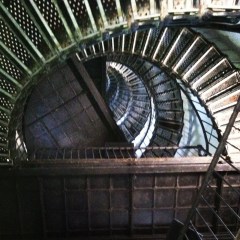
spiral stair caseWhat scares you? I’ve recently decided I’m afraid of open heights…you know, high places with very little barrier, or steep steps with open spaces in between where I can look waaay down…I usually make my husband go in front of me and I hold on to his shoulder, or else I get stuck right there!

This wasn’t always the case.  It has developed only recently but it’s still a strong fear.   I feel ridiculous talking about it because it seems so silly but my heart races and I feel all panicky when faced with a situation involving high open spaces.

In the classroom, we’ve spent a lot of time talking about being brave and what that means.  It could mean trying something new, speaking up when we aren’t sure of the answer, facing a bully, or doing something by yourself.  All of these can be daunting when you are 5 years old.  I’d venture to say some of these are daunting to adults as well.  My students are beginning to ride their bikes without training wheels these days and many come in reporting about their bravery in this feat.  Their pride is quite evident when it seems they’ve conquered something new.

Of all the scary things in their big, wide worlds, technology isn’t one of them.  A recent visitor went to one of my students and asked him about how he learned to do all of the things he was doing on the iPad.  He looked at her quizzically and said, “I didn’t learn it, I just do it.”  So Nike’s theme aside, “just doing it” seems to be how they all think about using this device.  It’s no big thing.  So why are the adults all standing on their heads about teaching kids how to use the device?  Possibly because we see the device in a different way than they do.  Obviously, we need to teach responsible use and digital citizenship, but I do not teach my class as a whole group how to use apps.  I work with a few students in a small group and they usually end up working with each other and helping each other.

illusionMany of you have seen this illusion  where you have to determine if it is an old woman or a young woman.  Some people have difficulty seeing the image as 2 different images.  I found that I saw the old woman first and then saw the young woman later.  I also found that once I saw the young woman, I had difficulty seeing it the other way without really concentrating on that.  As educators in connected classrooms, we have to be able to adjust our vision and see as our students do.  If we only see the “old woman” in the photo, we are missing out on the possibilities of the “young woman”.  We can’t be credible to our students if we are singularly minded.

Change is scary.  By keeping our eyes forward, not looking down or back, and letting go of the handrail, we can navigate that big open staircase.  It also doesn’t hurt if there is someone in front of you to hold on to…

Today we will do exciting new things.  Let’s get to it!

The Choice is Yours!

Tell me and I forget. Show me and I remember. Involve me and I understand. -Chinese Proverb

Would you want to work in a place that gave you no voice? Would you want to teach in a school that allowed you no autonomy in how you teach? What if your every day was prescribed as to what you would do, what you would say and how you would say it…

medium_2699584043As professionals, we become offended when the “higher ups” in education make decisions that affect us without including us in the decision making.  Even professional development is terribly ineffective when we just “sit and get” without any input.  Would an artist paint very often or very well if the subject of the painting was always assigned? Of course not. So why are we so reluctant to give our students choice in how they learn?

Choice.  It’s meaning is clear: an act of selecting or making a decision when faced with two or more possibilities. Choice.  It’s not just for adults.  Alfie Kohn writes a good article here about choices for children in learning.

To be clear, there is a difference between choice and free reign.  Without some control and teacher facilitation, it can be pure anarchy. Setting up the learning environment to allow for student choice is critical.  You would never open a closet to a 3 year old and ask them what they want to wear.  You would ask, “Do you want to wear this or this?”  In my room, we begin with simple choices and through a gradual release of responsibility, students eventually have multiple choices all throughout the day.

Last week we were working on the pumpkin life cycle.  By Friday, everyone was ready to show me what they had learned.  They were given 2 choices.  They could show me in Pic Collage or in Explain Everything.  Later, they will have other choices, but for now, 2 is all they need.

photo

Instructions were on the Smartboard and everyone was hard at work!

photoThis is one of the examples from Pic Collage.

This is one of the examples from Explain Everything.

When given choices, students engage and take ownership.  By learning how to make choices and make decisions at a young age, they are better equipped at these skills as they get older.  When children learn to think for themselves, they are also less likely to be easily led by others whose choices may not be as desirable.

We want our students to love the content…to love learning.  By giving choices we lessen the chance of burnout (for both students and teachers), and we increase the chances of engaged, independent thinkers.  None of us like to be told, “You have no choice in the matter.” Instead, let’s work toward, “The choice is yours!”

Today we will do exciting new things.  Let’s get to it!

One Way Sign Photo Credit:  Creative Commons


Parents and iPads

Let’s give them something to talk about. -Bonnie Raitt

medium_3610488258Have you ever been consumed with something?  You know, a project or idea that dominates your thoughts, dreams, conversations, lesson plans…When we are so immersed in something, we know every facet, every detail, every scintilla of it.  We assume that because we know all about it, that others should as well and we are a little nonplussed when they don’t.

I’m referring to our school wide use of iPads.  We have had iPads in a 1:1 setting since January 2011 in 3 classrooms and school wide since the 2011-12 school year.  We incorporate them into our daily activities.  We use them all throughout the day.  Our kids are engaged and excited.  We’ve had a technology night to showcase for parents what some of our classes are doing.  Surely, there is no question of HOW we use these amazing devices.  Except, there are.

An independent consulting firm issued parent surveys to gauge the level of support.  This survey asked what parents liked best about the use of iPads in the classroom and if there is anything that could be improved on.  Several surveys, more than should have, came back with parents saying they aren’t really sure how the iPads are being used.  They didn’t know enough about it to comment.

Well, ouch.  That hurt.  Our first reaction was, “Of course they know! How can they not??” Then with a little time and objectivity, we decided that we needed to do a better job of letting our little light shine.  We needed to be more intentional about including parents in the conversation.  We needed to give them something to talk about!  It was decided that we will have a monthly newsletter highlighting what’s happening with iPads at each grade level.  Here is our first:

ipads at dhes September 2013_1

This will go home in each class newsletter, be featured on our school website, and printed out and made into posters for each of our main hallways.  Teachers will also be more focused on communicating not just the “what”  by the “why” so parents can see value and be more closely involved in the process.  Yes, this is all common sense but it is easy to assume we are all engaged in the same conversation when we really aren’t.

Involving all stakeholders in a large project like this is critical.  I realize that I could stand on my head and eat a bug but that doesn’t mean everyone will get the information.  We will always have people say, “I never knew…” but by being more intentional in the curating and sharing of the good news, we are partnering in the best possible way with our students’ very first teacher…their parents.

Today we will do exciting new things.  Let’s get to it.  

PS:  Big shout out to Lisa Bevans for creating this awesome first parent newsletter!

Flickr photo credit

Creating a Code of Cooperation

“Can’t we all just get along?” -Rodney King

So we’ve just finished 8 days of the new school year and to my utter shock and disbelief, it took 7 of those days before it happened. I waited each day, bracing myself for it to occur. The. First. Tattle.

IMG_05797 whole school days. Shocking really, when you think about a class of 5 year olds. It came just in time. We finally finished our class Code of Cooperation. This code is created along with my students as an agreement of what we believe a good classroom looks like. The children brainstormed a chart full of ideas and each day we talked about those things, narrowed them down, combined like ideas and finally settled on four things. 1. Put things where they go. 2. Be nice to others an share. 3. Listen and do what you are asked to do. 5. Try your best. We discussed what each of these things look like and the students suggested pictures that would match the concept. We came up with 2 pictures of each. The students will add a few sticky notes next week as they come up with more refinements. They already decided we need to identify what it means to be nice. Someone said to use kind words. That will go on a sticky note as an addition.

I guess I actually misspoke above when I said we “finished” it. It is never really finished. We will make additions and changes throughout the year as we go. It is a “living, breathing” agreement. The children all showed their commitment by signing around the periphery of the poster. When students have voice in how they will interact in their learning environment, there is true ownership. They are able to monitor their own behavior and rate how they did. This also creates accountability. I am not the sole monitor of their behavior. We will talk about the code daily and review our commitment to it.

This week, we will use our iPads to draw pictures of what each of the expectations looks like. They will share their ideas with their groups and we will work on how we will address those who choose not to follow our code. We will also work on how using the iPads fit into our Code of Cooperation.

When students have voice and choice in their learning and their learning environment, they become stakeholders. Even 5 year olds understand what it means to choose and to have their choices heard. Aren’t we all a little more cooperative when we have had a say in a process? The pictures we have and the ones we will add also create a visual reminder of what we agreed upon.

As a class, our shared vision is that we will work and learn together. By breaking that down into its components, we now have a working agreement that will serve as a guide for this school year.

Hopefully, it will reduce some of the tattling too. 🙂 One can always hope…

Today we will do exciting new things. Let’s get to it!

Getting Started

Who dares to teach must never cease to learn.  ~John Cotton Dana

photo-12Today was the day…iPad Day.  It was the 5th day with students.  I had been questioned about the iPads every day since day one. I knew they were excited and ready to use them but we had some procedures and routines to get under our belts first.  Front-loading procedures is a “must do” when it comes to introducing iPads to students.  Yesterday, I took their pictures with their iPad and set it as the home screen and wallpaper.  That way, we all know which iPad belongs to whom.

My assistant and I pulled over small groups of 5 and we showed them how to turn on the device, put it to sleep, navigate screens, and how to adjust the volume.  I keep all of my apps in subject related folders.  We opened the ABC folder and we worked with a couple of apps and then we put them to sleep and put them back in the iPad cart.  Wait..what? That’s it? Yes…that was it for today.  Tomorrow, we do a little more.  Each day will build on the day before. I’ve learned after 3 years of 1:1 iPads, that not only do the children need procedures, I need them as well.  It’s very tempting to embrace the idea of “Go big, or go home”.  Taking small steps early on not only keeps me sane, it allows the children to learn in manageable chunks.  I had a few students tell me today they already know how to use the iPad because they have one at home. We talked about how we need to learn how to use them at school also.  Going slow now, means we can speed up in September.

Before long, they will be masters of this device.  But since it is a powerful learning tool and not a toy, it is important we take our time in learning proper care and handling as well as digital citizenship.  It also takes time to integrate the device into the curriculum in a way that is meaningful and not just have “app time”. I want them to be creators of content and not just consumers.  This is why teachers won’t be replaced by technology.

So, we will forge on in the coming days. I’m excited about all of the possibilities. We will learn the names of our classmates and how to work, learn and play together as a community of learners. We will also begin the exciting world of a student-centered classroom that incorporates iPads in kindergarten.

Today we will do exciting new things.  Let’s get to it!

Endings and Beginnings

“This is a new year. A new beginning. And things will change.” -Taylor Swift

IMG_2070I’ve been away from my blog for a couple of weeks…in fact, I’ve been away from almost everything.  My father passed away this past week after an extended battle with cancer and I was soaking up every minute with him that I could.  Bits of reality intruded as we started back to school last week with professional development days.  I went to some, not all.  Some things are just more important.

This past summer has been a time of both personal and professional metamorphosis for me.  Maybe you’ve noticed a shift in my blog posts.  I’ve spent a lot of time questioning what I really believe about teaching and learning.  I’ve spent time reflecting on what true leadership is.  I’ve read excellent blog posts from fellow educators and had conversations with colleagues.  I’ve made decisions and I’ve made some changes. There are endings and beginnings.

As I pursue a student-centered classroom this year, I will be building on some of the things put in place last year. There will also be an ending to some things that have previously been part of my class.  Missing from my classroom this year, will be a formal calendar time, formal homework , a stoplight behavior management system, and stated classroom rules. The links provided explain why beautifully.  My students and I will create together and deploy a shared classroom vision.  From that, we will build our classroom Code of Cooperation.  I will be sharing these with you as we build them.  We are also going to build behavior rubrics so that students can rate themselves on how they felt they did that day.

I worked a lot last year on building in student voice and choice by having my students choose which app they wanted to demonstrate learning.  I will be continuing that this year and my students will be building digital portfolios using the Showbie app. I am excited that one of our favorite apps, Book Creator, is able to be uploaded to Showbie and easily shared with parents. The iPad and the creation apps we use, have been essential to creating a student-centered classroom.

medium_143860670My work and reflection this summer, in addition to spending an amazing week with my fellow Apple Distinguished Educators, were the threads to the chrysalis spun around me the past 9 weeks.  Woven in, were many quality moments with my ailing father.  As I begin to emerge from this cocoon this week and meet my new students, I bring with me the collective wisdom of many wise people.  I am certain of my path and am excited about new possibilities.  I’m also aware of just how very short this life is and it is too short to waste time using outdated, inefficient methods for educating children simply because change is too hard.  The butterfly is a great reminder of the beauty of change.  We should be more afraid of the effects of not changing!

My students arrive this Wednesday.  A new journey begins…

Today we will do exciting new things.  Let’s get to it!

It’s Personal!

You have brains in your head. You have feet in your shoes. You can steer yourself any direction you choose. You’re on your own. And you know what you know. And YOU are the one who’ll decide where to go…Dr. Seuss

Who doesn’t love some Dr. Seuss? I believe his book Oh! The Places You’ll Go! could almost be a manifesto for Personalized Learning!

IMG_2012In my last postI mentioned that I was building that Personalized Learning plane while I fly it.  I have been working on setting up data notebooks for my students and thinking a lot about how to approach it.  Each child is different and unique, therefore personalized practice is necessary for personalized learning.  Student ownership and use of their data is essential to maximize learning. With student-maintained data folders for academic and behavioral goal setting, we can have a shared monitoring of progress through conferencing. Since data drives my instruction, there will be ongoing personalization of instruction to help meet student goals.  For each skill, students will determine their goal and will maintain their goal sheets after each assessment.  These folders will be accessible to students all the time so they will always have access to their progress. The folders will originally contain the usual assessments we give in the beginning of kindergarten…letter identification, naming letter sounds, beginning sight words, number recognition, rote counting, and shapes.  As students master these early skills, we will move on to the next set of skills.  Each one moves on as he/she is ready.

I was already doing this the last few years with high frequency words.  As students demonstrated mastery of one list, we added to the list.  We continued to add words as their abilities increased.  The last 3 years, all of my students completed 100 kindergarten sight words.  Most finished first and second grade sight words and even a few more finished third grade words.  I stopped at 3rd grade because comprehension begins to break down at that point.

But wait…I teach kindergarten.  How in the world will these young children be able to handle keeping track of data folders?  It is all in the way you organize your environment for learning and the expectations you set.  By working with each student, they will learn to take ownership in their learning.  By shared monitoring, they will learn how to make adjustments in their goals and articulate what they are learning.  You see, the key concept here is that they will learn.  As my students learn to create content with their iPads and create digital portfolios of their workflow, they will grow in their ability to discuss concepts and ideas. 

Part of my job as the lead learner in the classroom is to teach them how to be a stakeholder in their learning process.  And yes…even 5 year olds can handle it! After all, “Things may happen and often do to people as brainy and footsy as you!”

Today we will do exciting new things.  Let’s get to it!

What’s Your Story?

There is no greater agony than bearing an untold story inside you.-Maya Angelou

medium_4828439402Stories…we all have them, but have you ever thought about the power of story? As educators, we want to relate to our students and connect with them. Stories bring people along on your journey.  Stories move people to action.

We are built to remember stories much more than figures and data.  When we advocate for our ideas, we often use data and figures; however, our brains are wired to resonate with story.

A story is a connected set of events with a beginning, middle and an end. Stories persuade and they move people to action. Stories shape how others see you.  Stories are tools of power.  People slow down and listen when a story is being told. Listening matters.  Stories are the one way to invite people in, to have them not only know you but to get in touch with their own story as well.  Good stories ignite emotion.

So much of what we teach students evokes the “Who cares, so what?” response.  You know…the math problem that posits someone bought 60 cantaloupes and divided them into thirds.  How many did each person receive? Who cares?  More likely the question is, “What is wrong with this person that they have 60 cantaloupes?” Our students need to get to the “why” of what they are learning.  They need to resonate with the material and care about it.

When we take our students on an engaging journey, we can persuade them. Stories need to have goals. What do you want your audience to think, feel or do at the end of the story? My kindergarten students love stories.  They lean in and tune in when a story is being told.  They not only listen more attentively to me as I tell a story, but they also listen to classmates who are telling stories.

My students love telling stories on their iPads with Book Creator and Explain Everything.  These apps provide them with a platform to share and create.  Even students who may not seem overly creative, find a voice when they are sharing stories about themselves.

My story is documented here. I encourage you all to find your own story, but more importantly, think on the importance of story in your school environment and how it may be used to connect deeply with your students. How can you get your own students to tell stories?  We live life in narrative.  Story isn’t just a good idea….it’s necessary.

So, what’s your story?

Today we will do exciting new things.  Let’s get to it!

images from Creative Commons

Reflection on the Apple Distinguished Educator Institute

Words are a pretext. It is the inner bond that draws one person to another, not words-Rumi

Words.  So plentiful and easy to use in most situations…but what about those events in life for which there are no adequate words?  Those events that color your world and leave you transformed in such a way that defy explanation…

IMG_1925As I sit on the plane returning home from Austin, Texas, I am reflecting on just such an event.  6 days ago, I arrived in Austin to attend the Apple Distinguished Educator Institute.  Over 400 select educators from the United States, Canada and Mexico came together for a week of professional development, deep conversations, reflective practice and authoring.  I know when I get home, I am going to have several people ask me about the experience and that’s where things get difficult.  The adjectives I use will be inadequate to describe the week.  Words like awesome, amazing, transformative, affirming, celebratory, and inspiring are the best I can do.

For educators, our world is filled with a lot of “Yes, but….”.  This week showed me the possibility and power of “Yes, and…”.  The simple substitution of one small word in that phrase changes everything.  We also learned to celebrate failure and not to fear it.  With failure, comes learning.

We were encouraged to take deep dives in thinking about pedagogy and not be afraid to be leaders in change.  Leaders do not spend time curating the status quo.  They dig down deep and become the change they seek.

While our individual levels of technological knowledge varied, everyone accepted and celebrated each other’s work and success.  There was no competition or jealousy.  We were all made to feel like Rock Stars and were supported no matter where we are in our journey.  Meal times revealed tables and tables of people intently listening and passionately sharing.

Staff development offerings gave us opportunities to learn new programs, apps and techniques as well as get advanced learning in programs we already use. We had brilliant speakers and we learned about the importance of story…how the story isn’t about us and we aren’t the hero.  We are more like Yoda…a mentor (only with better hair!)

We learned about the power of iTunes U for educators and we learned how to create our own courses.  We were given projects and formed PLN’s (professional learning networks) with like-minded people.

We met the developers of many of the great apps my students use daily.  It was so much fun meeting Reshan Richards (Explain Everything and a member of the ADE class of 2013) and Dan Amos (Book Creator).  Both are pure genius.

Reshan Richards

Reshan Richards

Dan Amos

Dan Amos

For 17 hours each day, I was drinking from a fire hose.  I soaked up every minute and made connections that will for sure be my life-long friends.  I was given a legacy to do more, dream more, learn more and become more than I ever thought possible.

I am forever changed…and eternally grateful!

Today we will do exciting new things.  Let’s get to it!